
Unique Changemakers Require a Unique Understanding. Let’s start with an introduction to Catalysts.
In a world marked by rapid change, changemakers can be found any and everywhere. In fact, when we’re talking about VUCA-readiness—the ability to adapt to volatile, uncertain, complex, ambiguous circumstances—the argument has been made that changemakers must be everywhere. The character traits of vision, understanding, clarity, and agility (Bob Johansen’s VUCA prime framework) are prized skills that forward-thinking organizations should prioritize and reward across all levels.
Yet for every innovation network or conference that leadership sends teams to, there’s a unique type of changemaker left feeling unseen at best—underappreciated and resisted at worst. And their potential is often completely under the radar of the stakeholder who needs them most.
We know, because we can relate. We’ve been the shiny new thing that will solve all of the company’s problems…and the one who gets tossed out when those solutions throw a wrench in business as usual.
Our community gets it, too—from Tracey’s earliest clients who would blow past audacious goals (but still feel unaccomplished) to standout individuals within Shannon’s networks of intrapreneurs who consistently fell into burnout.
A certain kind of person doesn’t necessarily have to be told how to make change, because it’s simply how they show up in the world.
As we dug deeper into this phenomenon of unique changemakers, we noticed the concept of a Catalyst mentioned now and then—the book Leadership Agility broke down an entire category of highly evolved leaders that included a group they called Catalysts. One UK consultancy asked organizations if Catalysts were identifiable members of the team.
Remarkably, there were (and still are) few conversations around the Catalysts themselves.
So we set out to write the personal operations manual we wished we had 20 years ago. Because it’s important for organizations to see and appreciate the unique individuals who are agile by nature, but even before that, we have to see and appreciate ourselves.
That project became Move Fast. Break Shit. Burn Out.—and the response to it has been powerful.
When people come to the understanding that they are, in fact, Catalysts, there are a few realizations that come with it. The first tends to be a sense of empathy toward themselves, then toward others. Executives cry through page after page, or folks early on in their career come to fresh clarity on how to set out on their path.
We often hear, “Oh my God, I’m not crazy!” quickly followed by a new sense of understanding for the people around them: “They weren’t trying to make things harder. They’re just not Catalysts.”
You see, when we know why we move so fast, break so much, and burn out so often, it changes the way we relate to (and have compassion for) ourselves and others.
Backed by the research we compiled and experiences we documented, we literally wrote the book on who Catalysts are, what tools they need to step into their superpowers (and uncover their blindspots), and what possibilities are unlocked when they do.
This is the project of our lifetimes and will always reflect an ongoing body of work. But let’s take a few minutes to introduce ourselves as Catalysts—and maybe you’ll get to know yourself as one, too.
The Catalyst Defined
Most of us know and use the term catalyst in connection with its scientific roots. A catalyst is something we learned in high school chemistry class—the beginning or accelerator for a chemical change. We also talk about political and economic catalysts that we see preceding significant bursts in innovation or upheaval.

Use of the word Catalyst in our context—an archetype of unique changemakers facing unique challenges—is slowly gaining traction in the business world.
Our book itself could be considered the more complete definition of a Catalyst in this context. But one quick summary is this:
When someone asks us what a Catalyst is, the short answer is: it’s a person who takes in lots of information,
sees infinite possibilities, and can’t stop themselves from moving into action.
Catalysts stand out from the crowd—not because of their scale of change, necessarily, or even their enjoyment of it, but because of their innate drive to create it.
Catalysts thrive on absorbing new information and constantly recognize problems to be solved and opportunities to be seized.
They quickly visualize solutions (though they don’t always clearly communicate them) and readily step into action, gathering even more data from failures and coming to even clearer solutions as they go (though those shifts aren’t always spelled out either).
This often happens without hesitation—sometimes even without conscious awareness.
Catalysts are often pioneers of incredible change, innovation, ideas, and creation. We work with Catalysts who launch non-profits, start companies, and strive to solve large scale problems.
However, you don’t have to work at large scale to be a Catalyst. We support Catalysts across all levels of many disciplines, from entry-level junior positions to the people leading organizations. We see Catalysts thriving as artistic solopreneurs and as leaders in government.
In other words, what Catalysts do (and are free to do) will vary as much as the Catalysts themselves. But the underlying drive is the same: At their core, Catalysts are simply motivated to solve problems.
Any problems.
They’re constantly spotting opportunities to make the world around them better (whether or not the world around them asks for it).
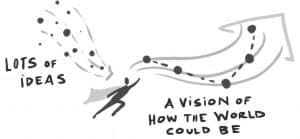
They see problems, find solutions, right wrongs, and challenge the norm without a second thought.
They don’t need to be told to innovate. It is simply written into their DNA.
And it is precisely this natural inclination that creates problems for Catalysts and the people around them. When it looks and sometimes feels like we’re making magic, we don’t often think about the process behind it (or the consequences on the other side).
As Catalysts, we find hope in imagining a better tomorrow and assume that others do as well.
There’s a comfort most people find in keeping things the same, and Catalysts rarely hold that need sacred.
But the very bias for change that brings discomfort also carries with it remarkable potential that the organizations, teams, and peers who work in partnership with the Catalysts are able to benefit from.
The skills and energy that Catalysts bring to the table can move us all into a brighter future.
This points us to another shared experience amongst Catalysts: All of that power that drives us toward our passions and projects forward just isn’t sustainable. Especially when it’s left to our subconscious processes.
As a result, we tend to burnout in regular, often predictable cycles. Run hard, hit resistance, feel stuck, burn out, repeat.
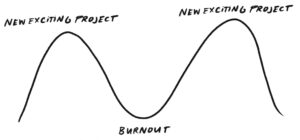
It’s helpful to know that you’re a Catalyst.
It’s life-changing to feel supported as one.
The Catalyst Supported
Before forming Catalyst Constellations, we both felt the need to bring groups of like-minded people together. But it wasn’t until we actually made that happen that we realized how much relief that would actually create.
You don’t know how much friction you deal with day to day until that friction is suddenly gone.

The clarity that self-identification as a Catalyst creates is often followed by a sense of relief to be amongst like-minded people. Not only do we begin to see ourselves differently, but we start to see others in a new light as well.
When Catalysts are supported within a community or as part of an intentional cohort like our Catalyzing Organizational Change course, the change that they’re working on comes into focus. The intensity they often show up with begins to redirect toward the change itself, focusing like a tractor beam and bringing more people along. The walls they run up against become saleable.
A supported Catalyst doesn’t have to wonder if they’re all alone in their vision anymore, or whether the magic is going to come through this time. They start to see themselves in their process and they see how others are affected by it.
Underneath the surface of all the skill-building and results-generating impact this creates, the biggest shift is a bi-directional empathy directed inward toward yourself and outward to others.
A New Sense of Self-Compassion
Nothing really compares to being in a room (or Zoom) full of Catalysts who’ve just realized they’re not alone.

When you look back on your life and it suddenly makes sense…When you look around at your current state and start to see how you got there…When you see the power in fellow Catalysts and then realize that same superpower lives in you too…
It’s like a weight taken off of your shoulders.
You’ve always seen the world differently than most, and now you have language to explain how and why.
You don’t just disrupt your surroundings—you see the solution before others may even notice the problem.
You don’t just push others outside of their comfort zone—your mind simply pieces together information in a way that makes action seem obvious to you that isn’t clear to them.
And you actually do know how to read the room—you feel the directional shifts in conversation and flow and just need to learn how to trust that.
Yes, you have room to grow.
But you aren’t broken.
The world needs Catalysts like you to shake things up, and you need self-compassion and rejuvenation if you’re going to make that happen.
The more our readers and community members understand themselves and each other, the more they’re able to practice self-compassion. They begin to self-heal as they reframe the circumstances of their lives and the challenges they used to blame themselves for.
When we see ourselves as Catalysts, we give ourselves space to be Catalysts.
A New Level of Empathy
As we begin to learn about our strengths as Catalysts and how to use them with more intention, that sense of self-compassion grows into a deeper level of empathy for others as well.
We start to acknowledge where we’ve made things difficult for the people around us, without holding judgment or blame about the way they reacted to those challenges.
We might see that we had come to a clear vision but neglected to share or externalize it at all before heading toward it. No wonder they felt disrupted!
Or maybe we secured buy-in, but as more data came in, we iterated and moved the goalpost without checking in. No wonder they felt lost!
Organizations need Catalysts to help them achieve, imagine, and move toward that brighter tomorrow, it’s true. But it will always be difficult for people to accept change—even though it is necessary to.
Once Catalysts self-identify and grow their strengths and intentionality, it’s easier for them to own those challenges that change presents and begin to advocate for themselves and others in clearer, more effective ways.
Catalysts who read the book or attend our courses find themselves stepping out with their catalytic tendencies forward:
- “I noticed that our conversation shifted—can we talk about that? I know I can get kind of intense when dots start connecting.”
- “Something you should know about me: I’m a Catalyst! That means I move kind of quickly, so if I lose you just let me know.”
- “I think I took off on my own and messed that up. Can we walk back what happened and make a plan that works for both of us?”
The amazing thing is, we often have those emotional awareness skills on hand already!
We already know how to read a room. We just have to learn how to leverage that skill as part of our movement toward change.
We become more considerate of others when we know how our magic works. When we can spot the subconscious formulas and processes that make us tick—and then, by extension, how different those processes are for the people around us.
We haven’t arrived after reading one book or taking one class. Honestly, we’re not sure Catalysts in particular can ever arrive—how boring would that be?
But everyone at the table is more successful when we lead with our strengths, hold awareness for our weaknesses, and create space for the journey toward a shared future.
The Thriving Catalyst
Once we saw the need to support Catalysts in their changemaking efforts, we couldn’t unsee it. Our work grew from weekend retreats to educational material to an online community, and it continues to grow to this day.
Because it’s easy to see that Catalysts exist—it’s not easy to know what helps them thrive.
Or what they can do to move through a new change more effectively.
Or who they can connect with to help sustain that energy.
Essentially, we have directed all of that unique changemaking energy toward ourselves—toward the “problem” of being a Catalyst in the world and the solutions that make it feel powerful instead of draining.
No matter what iteration Catalyst Constellations makes, our mission will always be to enable Catalysts to move more quickly and satisfyingly towards the impact they aspire to create (and with less burnout!)
This is the work that we’re doing across all Catalyst Constellations platforms, but especially in our courses. That’s where you’ll learn your strengths and blindspots as a Catalyst, assess your unique skills, recognize the value you bring to the table, and articulate that value in an effective way.
If you’re working on a specific change at the onset of one of our courses, you’ll learn how to formulate and share the vision, map out a plan of action, and pivot more effectively and intentionally.
If not, that’s okay—you’ll come to a deeper understanding of the way you think as a Catalyst and how you can leverage those skills the next time a change opportunity inevitably comes your way.
There is no secret Catalyst handshake that lets you in the club, either—though some might argue that a certain gleam in our eyes gives us away. No one’s waiting at the door to let you in or kick you out. Bottom line: If you’re shaping any kind of change in your world, you’ll likely find tools in our courses that will work for you.
If you’re standing at a point of transition or growth looking back at a trail of accomplishments and lessons learned—of criticism and miscommunication, big energy and big burnout, superpowers and super blindspots—wondering what to do next…
Welcome to our Constellation.

We didn’t create Catalysts. We didn’t even name you. But we see you. We share your strengths and struggles. And we’re here for you as you step into the changemaking power that you’ve always had inside of you.
If you’d like to better understand who Catalysts are and how you can make a difference without running yourself or your career into the ground, start with Move Fast, Break Shit, Burn Out. When you’re ready to dive even deeper, the Catalyzing Organizational Change course is an 6-week hands-on experience where you can learn new tools, practice innate skills, articulate and take steps toward a vision, and connect with others as you grow and create meaningful change together. Welcome to the Galaxy. We hope you’ll stick around.